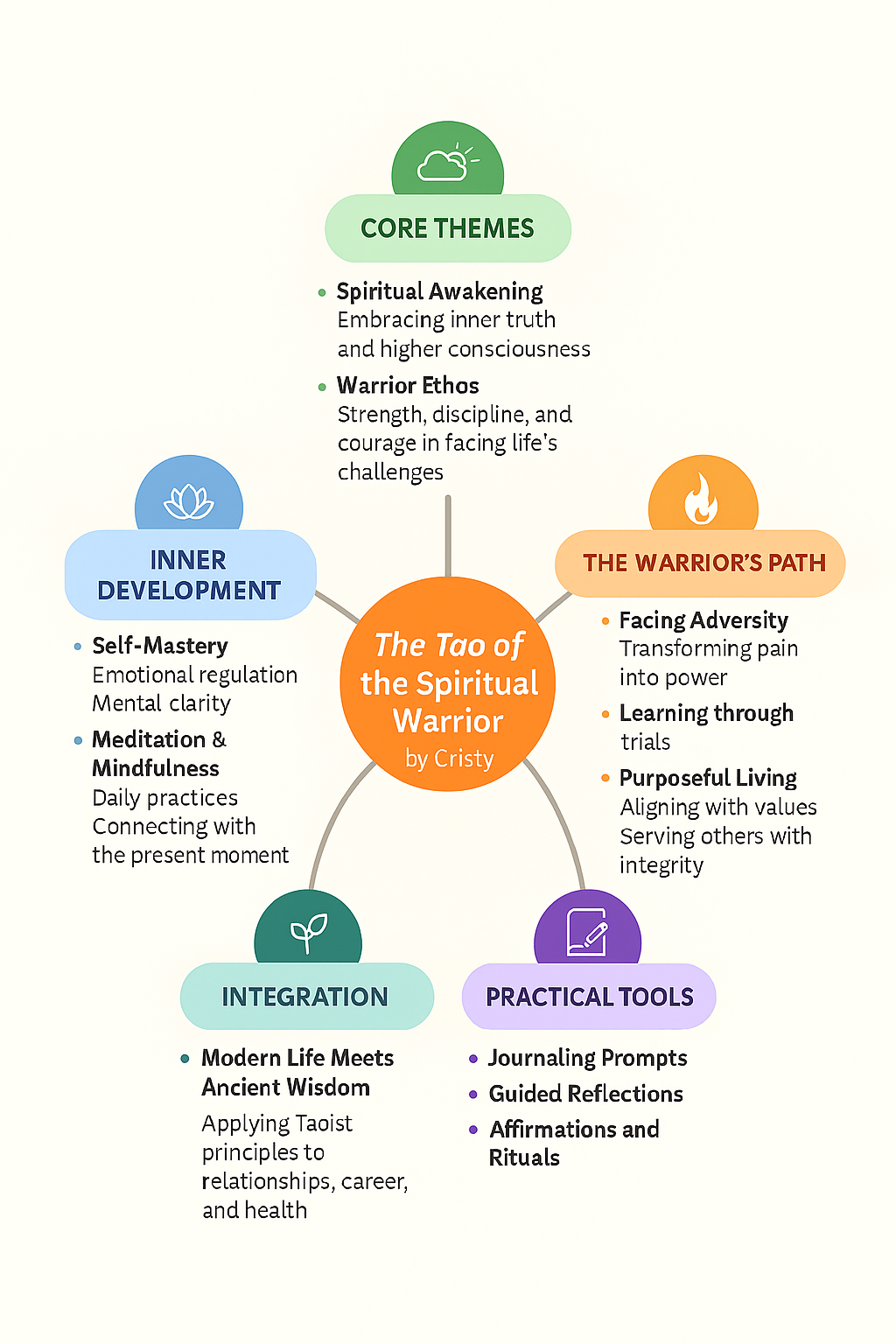
Strategies for the Spiritual Warrior
Tactical Wisdom from The Tao of the Spiritual Warrior
step into a different way of living, one that asks you to slow down, look inward, and meet life with clarity instead of chaos. It isn’t about adopting a new belief system or following a strict set of rules. Instead, it offers a collection of timeless principles meant to help you navigate the world with a steadier heart and a clearer mind. The “warrior” here isn’t someone who fights others, but someone who learns to face themselves with honesty and courage.
These teachings encourage you to question old habits, loosen the grip of your personal history, and become more aware of the energy you bring into each moment. They remind you that strength doesn’t come from force, but from presence, from the ability to act deliberately rather than react automatically. Through practices like conserving your energy, embracing humility, and recognizing the impermanence of life, the Spiritual Warrior learns to move through the world with purpose, compassion, and a quiet kind of power. It’s a path for anyone who wants to live more consciously and more authentically, one choice at a time.
The Path of the Spiritual Warrior
Living with Purpose, Resilience, and Inner Harmony
A spiritual warrior isn’t defined by conflict but by the choice to move in harmony with life’s natural flow. This path is guided by growth, courage, and compassion rather than force. It’s a commitment to meeting each moment with awareness and intention, allowing wisdom to unfold through experience.
Living in harmony with nature begins with recognizing that all life is interconnected. When we understand our place within the larger web of existence, we naturally become more mindful of how our actions affect the world around us. This awareness invites us to live in balance—supporting the planet rather than harming it, and honoring the rhythms of the earth as part of our own.
Inner peace grows when we cultivate mindfulness and create space for stillness. Through practices like meditation, we develop the clarity and calm needed to make thoughtful choices. This quiet center becomes a refuge we can return to, nurturing our well-being and helping us navigate life with steadiness.
Resilience is the strength to meet adversity with courage and flexibility. Instead of resisting challenges, we learn to see them as opportunities for growth. Each difficulty becomes a teacher, helping us evolve and deepen our understanding of ourselves and the world.
Self-mastery is the ongoing practice of shaping our thoughts, emotions, and actions with intention. When we align these inner forces with a higher purpose, we begin to live with greater authenticity and clarity. It’s a lifelong journey of refinement, not perfection.
Humility reminds us that we are always students of life. Acknowledging our limitations opens the door to curiosity, respect, and continuous learning. It keeps us grounded and receptive, allowing both personal and collective growth to flourish.
Compassion calls us to meet others with empathy and kindness. When we take the time to truly understand and care for one another, we strengthen our connections and uplift our communities. Compassion becomes a bridge, one that brings people together in meaningful ways.
Mindfulness invites us to be fully present in whatever we’re doing. It transforms ordinary moments into opportunities for awareness, gratitude, and deeper engagement. By paying attention, we enrich our experience of life and cultivate a more intentional way of being.
Service is the act of uplifting others through generosity and authentic leadership. When we give from the heart, we create a ripple effect of positive change. Service becomes a natural expression of our values and a powerful way to contribute to the greater good.
A spiritual warrior welcomes life’s trials as opportunities to grow. Every obstacle becomes a stepping stone toward greater wisdom and understanding. By walking this path with purpose and authenticity, the spiritual warrior rises above mere survival and chooses a life rooted in meaning, integrity, and service to something larger than the self.
Self-Discovery and Awakening
The journey of uncovering one’s true nature and potential through introspection and experience
Self‑discovery and awakening is a profoundly transformative journey. It’s the process of moving beyond indoctrination, inherited beliefs, and outside influences so we can uncover who we truly are. This isn’t just an intellectual exercise—it’s something we feel, live through, and grow into. It asks for courage, curiosity, and a willingness to question the assumptions we’ve carried for years.
The tao of the spiritual warrior is rooted in that kind of courage. It begins with honest introspection and clear thinking, an invitation to examine the reality we’ve accepted and to dismantle the conditioning that shaped it. Awakening unfolds when we challenge our assumptions, step out of the limiting stories handed to us by family, culture, and society, and claim the freedom to think for ourselves.
This path also requires releasing the weight of personal history. Old wounds and past experiences often hold us back more than we realize. Letting go of these burdens frees us from self‑imposed limits and creates space for genuine growth. In that openness, new possibilities emerge and hidden strengths rise to the surface.
Living deliberately is another essential part of the journey. It means making choices that reflect our deepest values rather than drifting through life on autopilot. The spiritual warrior acts with intention and takes responsibility for their direction. Life becomes less of a random sequence of events and more of a meaningful, consciously chosen adventure.
As awakening deepens, authenticity becomes central. The spiritual warrior learns to move beyond ego, choosing humility, openness, and compassion. This shift creates room for real connection—relationships grounded in honesty, mutual respect, and presence. When we release the need for self‑importance, we rediscover the beauty of our shared humanity.
Self‑discovery is never one‑dimensional. It calls for the integration of mind, body, and spirit through practices like mindfulness, meditation, movement, and self‑care. By tending to our inner world, supporting our mental well‑being, and caring for our physical health, we cultivate a sense of harmony that sustains us.
Challenges also take on new meaning along this path. Obstacles stop being threats and become catalysts for growth. The spiritual warrior meets difficulty with courage and a kind of passionate indifference, fully committed to the journey but not attached to any particular outcome. Through resilience and self‑mastery, every hardship becomes an opportunity to transform.
At the heart of all this is the search for purpose and meaning. It’s a personal, ongoing exploration. The tao of the spiritual warrior encourages us to stay open to change, to try new experiences, and to reflect on what gives our life direction. Purpose isn’t a final destination; it’s something we shape through awareness, choice, and action.
Awakening also expands our sense of reality. Consciousness shapes how we experience the world, and when we open ourselves to intuitive, energetic, or even non‑ordinary dimensions, deeper layers of truth begin to reveal themselves. Life becomes more than a series of events, it becomes an interconnected mystery.
The journey of self‑discovery and awakening is a lifelong process of questioning, learning, and evolving. It’s the shift from living according to outside expectations to living from inner wisdom, purpose, and genuine connection. Through reflection and experience, the spiritual warrior uncovers their true nature and potential, becoming a source of resilience, compassion, and light for themselves and for others.
Embracing the Warrior Spirit
Facing adversity with courage, discipline, and resilience as opportunities for growth
Dan Millman
Adversity isn’t a threat; it’s a catalyst for transformation. The warrior spirit is forged in the willingness to face challenges head‑on, drawing strength from courage, discipline, and resilience. Obstacles become raw material for growth, shaping a person who refuses to be defined by difficulty.
A spiritual warrior doesn’t run from hardship. They meet it with steady bravery, choosing to engage with life’s inner and outer battles as opportunities to evolve. Discipline becomes the backbone of this path, living with intention, honoring one’s principles, and making choices that reflect personal values even when circumstances are demanding.
Resilience develops through repeated encounters with struggle. The warrior spirit learns to turn setbacks into lessons, seeing failure not as a final verdict but as a necessary step toward mastery. Within this journey lies the idea of “passionate indifference”: being fully committed to the process while remaining unattached to specific outcomes. This mindset allows the warrior to persevere without being consumed by fear, frustration, or disappointment.
Every obstacle becomes a chance to build new skills, deepen self‑awareness, and strengthen character. The warrior spirit thrives on adversity, using it as fuel for empowerment and transformation. Humor and optimism play an essential role here. By finding moments of lightness even in difficulty, the warrior keeps motivation alive and opens space for creative problem‑solving.
The warrior chooses to live with purpose and clarity. Instead of reacting passively to life, they act with intention, shaping their path through mindful decisions. To embrace the warrior spirit is to welcome adversity as a teacher, cultivate the strength to endure, and transform every challenge into an opportunity for growth. Through courage, discipline, and resilience, the spiritual warrior not only rises above obstacles but also inspires others to pursue their own journeys of self‑mastery and awakening.
Cultivating Inner Peace and Balance
Using mindfulness, meditation, and self-awareness to achieve harmony
James Allen
True harmony does not come from trying to avoid or outrun life’s challenges. It grows from cultivating a steady sense of inner peace through mindful living, meditation, and self-awareness. These practices help a person stay centered, resilient, and compassionate no matter what is happening around them.
The tao of the spiritual warrior is rooted in presence. It invites a person to notice thoughts and emotions without judging them. With mindfulness, the spiritual warrior learns to respond with intention rather than react on impulse, which brings greater clarity and calm into everyday life. Meditation becomes a powerful way to quiet the mind, ease stress, and deepen self-understanding. With consistent practice, a person can access an inner stillness that remains steady even as circumstances shift.
The path to inner balance begins with honest self-reflection. By recognizing personal patterns, triggers, and motivations, the spiritual warrior can make choices that align with their values and support harmony. This journey also involves letting go of self-importance and embracing humility. Releasing the ego opens the way to genuine connection with others and reduces inner conflict, creating space for deeper peace.
Harmony touches every part of life. The spiritual warrior cares for mental health, physical well-being, and spiritual growth, understanding that balance in one area strengthens balance in all. Inner peace is not a passive state. It is an active way of living that allows a person to meet adversity with steadiness and strength. Stillness becomes the ground from which resilience and wise action grow. The tao of the spiritual warrior offers practical tools such as mindful pauses, visualization, and gratitude practices to help weave peace and balance into daily routines.
Cultivating inner peace and balance is a lifelong journey. Through mindfulness, meditation, and self-awareness, the spiritual warrior learns to bring mind, body, and spirit into harmony, creating a foundation for happiness, resilience, and compassionate living.
Living with Purpose and Meaning
Seeking and dedicating oneself to a life of personal growth and service
Mark Twain
A meaningful life doesn’t simply appear on its own. It grows from intention, steady personal development, and a sincere desire to contribute to the world around you. Purpose becomes clearer through reflection, through taking action, and through staying open to change.
The tao of the spiritual warrior invites you to explore who you are and who you are becoming. It encourages curiosity, welcomes new experiences, and challenges you to question your assumptions. Purpose is not a fixed destination. It unfolds as you learn, stretch, and push beyond your comfort zone. The spiritual warrior commits to ongoing self‑improvement, meets personal obstacles with resilience, embraces change, and strives to become the best version of oneself through discipline and honest reflection.
True meaning is not found only in personal achievement. It also grows from the ways we support and uplift others. The tao of the spiritual warrior emphasizes compassion, empathy, and generosity, reminding us that serving others can be a powerful path to fulfillment. Living with purpose means making choices that align with your values and principles. Instead of drifting through life, the spiritual warrior acts with intention and takes responsibility for shaping their own path.
Meaning shows up in everyday moments, in relationships, and in small acts of kindness. When you commit to growth and service, each moment becomes an opportunity to live with purpose. The spiritual warrior understands the deep connection between all beings and recognizes that personal growth and service strengthen one another, creating a balanced and meaningful life. Living with purpose also means being mindful of how your actions affect others and the world. The tao of the spiritual warrior encourages you to leave a positive legacy through thoughtful choices and acts of service.
Overcoming Indoctrination
Recognizing and breaking free from inherited beliefs and societal conditioning
Indoctrination is often a quiet but powerful force that shapes our beliefs, values, and perceptions from the time we are young. Learning to move beyond it becomes an essential part of discovering who we truly are and growing spiritually.
The tao of the spiritual warrior teaches that many of our beliefs come from family, culture, and society. We tend to accept them without question because of early conditioning and the desire to belong. Breaking free begins with learning to think critically. The spiritual warrior is called to question the reality that everyone else agrees on, to examine inherited beliefs, and to search for truth beyond what is commonly accepted. This path also reveals the pressure to conform and the fear of rejection that keep people tied to groupthink. Overcoming indoctrination requires courage, especially the courage to stand apart and trust one’s own mind.
As the spiritual warrior matures, they learn to value their own perspective. They release the need for outside approval and begin to walk a path shaped by their own values and lived experience. This process involves letting go of old stories and beliefs that no longer support growth. When these limiting narratives fall away, the individual becomes free from self‑imposed boundaries and opens the door to new possibilities. Instead of moving through life on autopilot, the spiritual warrior makes conscious choices, questioning habits and assumptions to ensure they reflect their true self.
Overcoming indoctrination is not something that happens all at once. It is an ongoing practice. Regular self‑reflection helps uncover lingering influences and supports the development of a more genuine worldview. Through steady introspection and intentional living, the spiritual warrior moves closer to freedom and truth, embracing individuality and living with purpose.
Overcoming indoctrination is about waking up to the forces that shape our beliefs, questioning the narratives we inherited, and choosing a path rooted in independent thought and authentic living. The journey of the spiritual warrior is one of liberation, self‑awareness, and continual growth.
Critical Thinking and Independent Thought
Encouraging skepticism, questioning, and the development of one’s own beliefs
Critical thinking is a foundation for both personal and spiritual growth. The tao of the spiritual warrior encourages you to move beyond passive acceptance and to cultivate a blend of skepticism and curiosity as you shape your own understanding of the world. Rather than inheriting beliefs unquestioned, you learn to examine them, explore alternatives, and arrive at conclusions that feel true through your own experience.
A spiritual warrior questions the assumptions handed down by culture, family, and habit, recognizing that truth is often obscured by routine and collective agreement. In this approach, skepticism is not a form of cynicism but a tool for uncovering deeper insight. Inquiry becomes a daily discipline: testing ideas, seeking evidence, and considering multiple viewpoints before settling on a belief. Through this steady practice, independent thought begins to flourish, and you learn to trust your own reasoning, intuition, and direct experience instead of relying solely on external authority.
This teaching also highlights the subtle pull of groupthink and how easily conformity can dull awareness. Maintaining intellectual autonomy, especially when social pressure is strong, becomes an act of courage. Critical thinking is seen as a lifelong commitment that requires openness to new information and a willingness to revise your views as your understanding evolves. As independent thought strengthens, confidence grows, and with it a deeper sense of self‑reliance and authenticity.
The tao of the spiritual warrior also values open dialogue. Respectful conversation and the exchange of ideas are understood as essential, because a diversity of perspectives enriches both personal insight and collective wisdom.
Critical thinking and independent thought are essential for living with integrity. By embracing skepticism, asking meaningful questions, and forming beliefs through personal reflection, the spiritual warrior moves through life with clarity, honesty, and a steady commitment to truth.
The Power of Choice and Living Deliberately
Making conscious decisions aligned with personal values rather than reacting passively
The greatest power any person holds is the ability to choose. Living deliberately means acting with intention and staying guided by personal values rather than drifting through life on autopilot or reacting without reflection. It is the difference between being carried by circumstances and consciously shaping the direction of your own life.
The tao of the spiritual warrior teaches that every moment presents an opportunity to choose. With awareness, the spiritual warrior can guide thoughts and actions toward their highest values and aspirations. Life does not simply unfold by default. Instead, the spiritual warrior sets clear intentions and priorities, making thoughtful decisions that shape their path. Each choice is measured against core beliefs and guiding principles, strengthening integrity, authenticity, and a deep sense of purpose.
Living deliberately also involves taking responsibility for one’s actions and their consequences. This responsibility becomes a source of empowerment because it allows a person to create the future they truly want. The tao of the spiritual warrior warns against the temptation of ease and the path of least resistance, which often leads to unrealized potential. Rather than slipping into passivity, the spiritual warrior chooses to meet life’s challenges and opportunities with full engagement. This intentional way of living brings clarity and direction, easing anxiety and nurturing a deeper sense of satisfaction and happiness.
A spiritual warrior reflects often on their choices and the outcomes of those choices, adjusting their course whenever needed to stay aligned with their values and goals. Through ongoing self-reflection and conscious decision-making, life becomes a meaningful journey rather than a series of accidents.
At the heart of the spiritual warrior’s path lies the power of choice and the practice of living deliberately. By making conscious decisions rooted in personal values, individuals move from passive existence to purposeful living, shaping a life filled with meaning, fulfillment, and self-mastery.
Guiding Principles and Tenets
Establishing a personal code to guide decisions and reduce cognitive dissonance
Developing a personal set of guiding principles is essential. These inner rules act like a compass, helping you make decisions and stay grounded when life becomes complicated. Everyone’s principles look a little different because they grow out of reflection, experience, and the lessons you gather over time.
In the tao of the spiritual warrior, the aim is to create a small set of clear, non‑overlapping principles that express your deepest values. These tenets form the foundation for choices that feel honest and consistent. When your actions align with what you believe, you experience less inner conflict and a greater sense of peace. Whenever a difficult decision appears, the spiritual warrior turns to their personal code and chooses the path that reflects their beliefs and long‑term intentions.
Common tenets include honesty, compassion, perseverance, gratitude, humility, forgiveness, courage, and kindness. Each one stands on its own without contradicting the others, which allows them to offer steady guidance in many situations. These principles are not meant to stay frozen in place. They evolve as you evolve, which is why regular self‑reflection keeps your personal code relevant and meaningful.
Living by a clear set of tenets helps you act with intention rather than reacting on impulse. It strengthens your integrity, gives you direction, and makes it easier to stay true to your values. Over time, this creates a deeper sense of purpose in everything you do.
Establishing guiding principles is a core practice for the spiritual warrior. It supports consistent, value‑driven choices, reduces inner turmoil, and helps you build a life filled with clarity, purpose, and fulfillment.
Letting Go of Ego and Self-Importance
Transcending the need for validation, superiority, or control
True strength and freedom begin to emerge when a person loosens their grip on ego and self‑importance. The path of the spiritual warrior is not about proving anything or seeking validation. It is about moving beyond the need to feel superior or in control and choosing humility, compassion, and genuine connection instead.
The tao of the spiritual warrior, ego is seen as the sense of identity and self‑importance that often creates separation, attachment, and resistance. Ego has its practical uses, but when it dominates, it fuels conflict, insecurity, and suffering. The spiritual warrior learns to release the need for external approval and the urge to stand above others. This shift nurtures authentic self‑worth and opens the way to deeper, more meaningful relationships.
As the warrior lets go of self‑importance, qualities like humility, empathy, and kindness naturally grow stronger. These qualities support harmony within oneself and with others. The tao of the spiritual warrior also teaches the value of surrendering the impulse to control outcomes or people. Rather than trying to force life to bend to their will, the warrior trusts its natural flow and acts with clarity, integrity, and wisdom.
Without the weight of ego, interactions become more sincere and respectful. The warrior begins to see others as equals, which encourages mutual understanding and collaboration. Letting go of ego brings a sense of lightness and freedom, making it easier to meet life with openness, humor, and joy.
By stepping away from ego‑driven reactions, the spiritual warrior avoids unnecessary conflict, seeks peaceful solutions, and communicates with intention and care. Letting go of ego and self‑importance is a deeply transformative practice, and as the need for validation fades, a more grounded and liberated way of being begins to take shape.
Humility, Compassion, and Empathy
Fostering genuine connections and understanding others’ experiences
Humility, compassion, and empathy are essential qualities for anyone seeking spiritual growth and genuine connection. These virtues help the spiritual warrior move beyond ego, relate more deeply to others, and contribute to a more peaceful and harmonious world.
The tao of the spiritual warrior emphasizes the importance of recognizing your own limits and remaining open to learning from the people around you. Humility allows you to release self‑importance and approach life with sincerity and openness. Compassion is the willingness to notice the suffering of others and respond with kindness. A spiritual warrior offers support where it is needed and helps create a sense of community. Empathy is the ability to see the world through someone else’s eyes and understand their feelings and perspective. When the spiritual warrior practices empathy, they build authentic connections and help bridge differences.
Together, humility, compassion, and empathy form the foundation of healthy and meaningful relationships. The spiritual warrior listens with care, treats others with respect, and honors the dignity of every person. These virtues uplift others while also supporting personal healing and growth. By letting go of judgment and choosing understanding, the spiritual warrior cultivates inner peace and resilience. Through compassionate action and empathetic listening, they become a steady force for good, inspiring others to act with kindness and integrity.
The tao of the spiritual warrior reminds us that all life is interconnected. It encourages you to extend humility, compassion, and empathy not only to those closest to you but to the wider world as well. These qualities make it possible to form real connections and appreciate the experiences of others. When the spiritual warrior lives by these virtues, they create a life filled with meaning, harmony, and positive influence.
Resilience and Mental Toughness
Building emotional regulation and the ability to recover from setbacks
Carlos Castenada
Resilience and mental toughness are essential qualities for navigating life’s challenges. A spiritual warrior learns to regulate emotions and recover from setbacks, treating adversity as an opening for growth rather than a dead end. This path emphasizes emotional steadiness, especially when circumstances become difficult. Through mindfulness and self-awareness, the warrior develops the ability to respond with intention instead of reacting on impulse.
The tao of the spiritual warrior teaches that resilience is the capacity to rise again after hardship. Failures and obstacles are viewed as temporary, each one offering a lesson that strengthens character and deepens resolve. Mental toughness grows through discipline, perseverance, and a steady commitment to personal development. These qualities help the warrior stay focused on long-term goals even when discouragement appears.
A positive outlook keeps the spiritual warrior motivated and creative, even in challenging moments. Humor and perspective become tools for staying grounded and adaptable. Every difficulty is reframed as an opportunity to improve, and the warrior reflects on setbacks, learns from them, and carries those lessons forward. Regular practices such as meditation, self-care, and honest reflection build inner strength and emotional balance. Resilience is not only a personal practice; the spiritual warrior also supports others, creating a sense of shared encouragement and collective strength.
Resilience and mental toughness make it possible to overcome adversity and truly thrive. By cultivating emotional regulation and the ability to recover from setbacks, the spiritual warrior transforms challenges into stepping stones toward growth, fulfillment, and lasting inner peace.
The Law of Unintended Consequences
Recognizing that actions often have unforeseen effects and the importance of holistic thinking
The Law of Unintended Consequences reminds us that every action, even those rooted in good intentions, can create effects we never anticipated. For the spiritual warrior, this becomes an invitation to think in a more holistic way and to consider how each decision touches not only their own life but also the people and situations around them.
The tao of the spiritual warrior shows that even when we act with a clear purpose, the results can unfold in surprising directions. This plays out in relationships, personal growth, and spiritual practice. The narrative offers familiar examples: pouring all your energy into a romantic relationship and watching friendships fade, or pursuing financial success so intensely that health and family ties begin to weaken. These stories reveal how every choice sends ripples through the rest of life.
Because of this, the spiritual warrior is encouraged to recognize how deeply everything is connected. When we pause long enough to consider the possible ripple effects of our actions, we are more likely to make choices that are balanced and thoughtful. The tao also reminds us to hold inner peace and social connection together, since withdrawing too far from others can create emotional consequences we never intended. Holistic thinking means looking beyond immediate results and understanding how our actions shape long-term well-being, relationships, and personal fulfillment.
A spiritual warrior learns from outcomes, both the ones they hoped for and the ones they never expected. Each experience becomes a lesson that supports wiser choices in the future. By acknowledging the Law of Unintended Consequences, we cultivate responsibility, awareness, and a more compassionate way of moving through the world.
This principle teaches the value of mindful action and broad awareness. When we take the time to consider the wider effects of our choices, we create a life that reflects greater harmony, deeper wisdom, and a more positive influence on the world around us.
Integration of Modern Wisdom and Ancient Practices
Applying timeless spiritual concepts to contemporary life
The distance between ancient spiritual traditions and modern life can seem wide, yet the wisdom of the past still has a meaningful place in today’s fast‑moving world. The tao of the spiritual warrior invites you to draw from both old teachings and contemporary understanding so you can build a life that feels balanced, purposeful, and resilient.
This path is rooted in practices such as mindfulness, meditation, humility, and living in harmony with the Tao, the natural flow of the universe. These ideas remain deeply relevant, and when adapted for modern living they become practical tools for managing stress, regulating emotions, and supporting personal growth. By blending ancient insights with modern science, including perspectives from neuroscience and psychology, the tao of the spiritual warrior offers a holistic approach to well‑being that honors the mind, body, and spirit.
It is also a path of action. You are encouraged to bring meditation, mindful awareness, and ethical principles into your daily routines, your work, and your relationships. Practices like meditation and self‑reflection become ways to build resilience, adaptability, and clarity in a world that changes quickly and often unpredictably. The spiritual concepts explored here rise above cultural and historical boundaries, offering guidance that can speak to anyone, regardless of background. This journey invites continuous learning and openness, weaving together the strengths of ancient traditions with the insights of modern understanding.
When you integrate modern wisdom with ancient practices, you gain the tools to meet contemporary challenges with timeless insight. As spiritual principles become part of everyday life, the spiritual warrior moves through the world with greater harmony, resilience, and a deeper sense of fulfillment.
Erasing Personal History
Releasing attachment to past narratives to live authentically in the present
Erasing personal history can become a powerful way to reshape how we live and to step into a more genuine expression of who we are. When we loosen our grip on old experiences, painful memories, and the stories we use to define ourselves, we create room to inhabit the present more fully. In that space, we reconnect with our true nature and begin to live with greater clarity and intention.
The tao of the spiritual warrior encourages us to release the narratives that whisper we are inadequate or unworthy. As these familiar stories fall away, new possibilities begin to open. Strength and transformation exist only in the present moment. Letting go of personal history frees the spiritual warrior from the pull of the past and makes space for real growth. When we stop performing roles shaped by old wounds or expectations, we naturally become more sincere, compassionate, and open in how we relate to others and express ourselves.
From this perspective, identity is not fixed. It shifts, evolves, and reveals itself over time. Erasing personal history removes layers of ego and conditioning so the authentic self can emerge. The path requires courage because it asks us to step into the unknown and move beyond what feels familiar. Yet the rewards are profound: a sense of freedom, a deeper authenticity, and a widening of spiritual awareness. The purpose is to move beyond ego-driven patterns and release the suffering they create, recognizing that our true essence is found in present awareness rather than in the stories we carry.
For the spiritual warrior, erasing personal history becomes a foundation for living. It allows them to be fully present and to shape a future filled with possibility. At its heart, this practice is about letting go of the past so we can live honestly and openly right now. When limiting narratives fall away, the spiritual warrior discovers a clearer sense of self, a renewed feeling of freedom, and the power to choose their own path.
Spiritual Privacy and Discretion
Valuing humility and protecting one’s inner life from unnecessary exposure
Spiritual privacy is a quiet expression of humility and self‑respect. When someone protects their inner life and chooses carefully what to share, they preserve their authenticity and avoid speaking from ego. This restraint gives their spiritual growth the space it needs to unfold in a natural, grounded way.
The tao of the spiritual warrior teaches that oversharing about one’s path often stems from a desire for validation or recognition. True humility shows itself when actions and presence speak more clearly than explanations. Living this way honors the inner world by keeping certain insights, struggles, and experiences private. It protects the sacredness of the journey and shields it from unnecessary judgment or misunderstanding.
Practicing discretion also creates room for others to express themselves. It encourages relationships that feel more balanced and genuine, built on mutual respect rather than competition or comparison. Privacy supports autonomy as well, helping a person stay free from the pull of outside opinions and expectations. Being thoughtful about what to share, when to share it, and with whom reduces conflict, distraction, and the risk of being misunderstood or taken advantage of.
Turning inward allows the spiritual warrior to deepen their practice, strengthen self‑awareness, and grow without interference. At the same time, the tao recognizes the value of healthy openness. Sharing with trusted people at the right moments can offer support, clarity, and real connection. In this balance, the spiritual warrior moves through life with integrity, inner steadiness, and mindful engagement.
Spiritual privacy and thoughtful discretion are essential for authentic growth. By protecting the inner life from unnecessary exposure, the spiritual warrior cultivates depth, independence, and meaningful connection along the path.
Freedom from the Approval of Strangers
Building self-worth independent of external validation
True confidence and inner peace grow from self‑acceptance rather than from what others think of us. When we chase approval from strangers, we often end up feeling insecure and disconnected from who we really are. A spiritual warrior learns to anchor their sense of worth in personal values and inner growth, not in the shifting opinions of the outside world.
The tao of the spiritual warrior teaches that relying on external approval creates vulnerability and weakens individuality. Opinions from strangers rise and fall, and they rarely carry real depth, so they make an unstable foundation for self‑worth. Real confidence develops through self‑awareness, discipline, and a commitment to one’s guiding principles. Living authentically becomes the priority, even when that means choosing a path that does not match society’s expectations.
Releasing the need for validation eases the pressure to perform for others and brings mental clarity and emotional steadiness. When we stop depending on strangers’ approval, we reclaim control of our happiness and our choices. Instead of chasing applause, we can direct our energy toward meaningful goals and genuine service. Practices such as mindfulness, journaling, and affirmations help strengthen self‑worth and reduce the pull of outside opinions.
Freedom from the approval of strangers is a cornerstone of spiritual resilience. When self‑worth is rooted in inner values rather than external validation, the spiritual warrior discovers authenticity, confidence, and peace.
Breaking Habits and Protocols
Questioning routines and scripts that no longer serve personal growth
Habits and protocols can give life a sense of order, but when we follow them without awareness, they begin to confine us. A spiritual warrior learns to question the routines and scripts that once offered stability but now restrict growth. Instead of moving through life on autopilot, they choose flexibility and conscious action.
The path of the spiritual warrior reveals how repetitive behaviors and rigid rules can lead to stagnation. These patterns can dull creativity and distance us from our authentic selves. To rise above that, the warrior cultivates awareness and learns to recognize which habits come from comfort or fear rather than genuine purpose. Breaking these patterns means shifting from unconscious repetition to intentional choices that reflect personal values and evolving goals.
Real growth requires adaptability. The warrior learns to adjust routines as life changes rather than clinging to old scripts that no longer serve them. This process can feel uncomfortable, but that discomfort often signals transformation. Practices like mindfulness, journaling, and setting clear intentions become practical tools for dissolving unhelpful habits and building empowering ones.
By questioning their routines, the spiritual warrior frees themselves from unconscious conditioning and opens the door to authentic, meaningful growth. Breaking outdated habits is ultimately about challenging the patterns that no longer support evolution. When unconscious behaviors are replaced with deliberate action, the warrior becomes more adaptable, more creative, and more aligned with their true path.
The Finite Nature of Life and Time
Making the most of limited time by prioritizing meaningful pursuits
Life is impermanent, and time is the most precious resource we have. When we truly recognize how limited it is, we feel a natural pull to live with intention. Instead of getting swept up in trivial distractions, we begin to focus on what genuinely matters.
Seeing the brevity of life is not a morbid realization. It is liberating. It encourages us to act with purpose and a sense of healthy urgency. A spiritual warrior learns to devote time to what aligns with personal values, growth, service, and meaningful relationships, rather than chasing achievements that only appear important from the outside. Habits, distractions, and obligations that do not support real growth gradually fall away, creating space for what actually deserves our attention.
By staying rooted in the present moment, the warrior avoids getting trapped in regret about the past or anxiety about the future. Each experience becomes more vivid and more meaningful. Finding harmony between responsibilities and personal fulfillment becomes essential, because time is best spent on what brings joy and purpose. Every action is viewed through the lens of the legacy it will leave, with the hope of creating something that endures beyond one lifetime. Simple practices such as mindful scheduling, regular reflection, and clear priorities help ensure that limited time is used wisely.
When we understand how finite life truly is, we gain the power to live with intention. By choosing meaningful pursuits and embracing the present, the spiritual warrior shapes a life filled with depth, impact, and fulfillment.
Passionate Indifference
Committing fully to actions while remaining unattached to outcomes
Passionate indifference is a paradoxical but powerful way of moving through the world. It means giving your best with full commitment and then releasing any attachment to how things unfold. When you approach life this way, you build resilience, sharpen your clarity, and free yourself from the heavy weight of disappointment.
The spiritual warrior embodies this mindset. They bring energy, focus, and dedication to every task, aiming for excellence in the effort itself. Even while working with intention, they avoid getting tangled in the outcome, knowing that many forces lie beyond personal control. By letting go of that attachment, stress begins to soften and the fear of failure loosens its grip. What emerges is space for creativity, authenticity, and a more grounded sense of purpose.
This way of living also helps people recover from setbacks more quickly. Challenges become lessons rather than defeats. Attention shifts away from chasing approval and toward acting with integrity, staying aligned with personal values instead of seeking applause. The result is a steadier, more centered approach to both success and struggle.
Practices such as mindfulness, visualization, and reframing support this blend of passion and detachment. Over time, the warrior discovers that real strength comes from mastering effort rather than outcomes. That mastery brings a deep sense of peace, confidence, and inner freedom.
Passionate indifference is wholehearted engagement without the chains of expectation.
Governing Dynamics and Group Harmony
Balancing individual interests with the well-being of the collective
True harmony within any group grows from balancing personal aspirations with the well‑being of the whole. A spiritual warrior learns to navigate this balance with intention, encouraging cooperation while still honoring their own identity. This approach allows them to participate fully without losing themselves in the process.
The tao of the spiritual warrior teaches that every group operates through unspoken rules and shared values. When we understand these underlying dynamics, we can contribute in ways that support both the collective and our own integrity. The spiritual warrior respects individuality but does not allow ego to dominate, recognizing that collaboration thrives when personal goals align with the group’s purpose. Through empathy and active listening, they ease tension, reduce misunderstandings, and help create conversations that move teams and communities forward.
Collective success depends on mutual accountability, where each person offers their effort without seeking special recognition. Healthy governing dynamics require decisions that consider long‑term effects on both individuals and the group, creating a foundation of fairness and sustainability. Practices such as building consensus, communicating openly, and clarifying roles help maintain the delicate balance between ambition and harmony.
The spiritual warrior fosters an environment where different perspectives are welcomed, turning collaboration into a source of strength rather than a point of conflict. Governing dynamics and group harmony emerge from a thoughtful blend of self‑interest and shared responsibility. By choosing empathy, accountability, and ethical action, the spiritual warrior supports personal growth while contributing to the success of the community.
Tuning Spiritual Energy
Practices for maintaining spiritual, mental, and physical vitality
Spiritual energy is the foundation of holistic well‑being. When a spiritual warrior learns to tune this energy with intention, they strengthen mental clarity, emotional steadiness, and physical vitality. This alignment creates a life guided by purpose, resilience, and a deeper sense of inner balance.
Daily mindfulness and meditation quiet the mind, ease stress, and restore equilibrium. Conscious breathing supports the natural flow of energy, sharpens focus, and encourages deep relaxation. Movement practices such as yoga, tai chi, and other forms of gentle exercise help bring the body and spirit into harmony, improving circulation and enhancing overall vitality.
The tao of the spiritual warrior emphasizes nourishing the body with wholesome foods to sustain energy and support clear thinking. Time spent outdoors replenishes spiritual reserves and nurtures a sense of connection with the natural world. Simple habits like gratitude journaling and affirmations elevate emotional energy and build resilience in everyday life.
A spiritual warrior also learns to recognize shifts in their energy and responds with restorative practices. Solitude, creativity, or quiet reflection become tools for returning to balance when life feels overwhelming or scattered.
Tuning spiritual energy is an intentional act of caring for the whole self. By bringing the mental, physical, and spiritual aspects of life into harmony, the spiritual warrior cultivates clarity, strength, and a lasting sense of vitality.
Healing from Trauma and Emotional Tethers
Techniques for processing and releasing past pain
Unresolved trauma and lingering emotional attachments can quietly limit our spiritual growth and sense of freedom. Healing asks for deliberate, compassionate effort. It invites us to face our pain, loosen the stories that keep us small, and gradually return to a place of inner steadiness.
The first step is simply acknowledging that the trauma exists, without minimizing it or pushing it aside. That kind of honest recognition creates the opening for real transformation. Practices such as meditation and slow, mindful breathing help calm the nervous system so emotions can be witnessed rather than avoided.
A spiritual warrior learns to view painful experiences as teachers instead of lifelong burdens. Journaling, creative expression, and somatic practices offer safe ways to release the emotional weight the body holds. Letting go of resentment, whether toward ourselves or others, clears space within and supports deeper healing.
The path of the spiritual warrior also includes seeking guidance from trusted mentors, therapists, or spiritual teachers who can help navigate the more complex layers of emotion and recovery. Nourishing routines, supportive movement, balanced meals, and adequate rest all help keep the mind and body grounded throughout the healing process.
Recovering from trauma and emotional entanglements is a journey of awareness, release, and renewal. Through mindfulness, reframing, and compassionate practice, the spiritual warrior gradually reclaims inner peace and moves forward with greater clarity and strength.
The Power of Attitude and Humor
Using optimism and laughter as tools for resilience and creativity
Attitude shapes the way we see the world and the way we move through it. When we meet life with a positive outlook and a sense of humor, challenges begin to feel more like opportunities than obstacles. That shift strengthens resilience, sparks creativity, and supports emotional well‑being.
The spiritual warrior chooses hope. They look toward what is possible instead of dwelling on what is not. That kind of optimism fuels perseverance and clearer problem‑solving, allowing them to face difficulties with confidence. Humor becomes a steady companion, easing stress, deepening connection, and offering relief when times are heavy. By lightening the emotional load, humor makes hardship feel more manageable.
A constructive attitude helps the warrior recover from setbacks and stay grounded under pressure. Humor widens perspective as well, making space for fresh ideas, flexible thinking, and inventive solutions. When people laugh together, trust grows, and groups become more resilient and cooperative.
The tao of the spiritual warrior encourages simple, practical habits: practicing gratitude, reframing negative thoughts, and noticing the small moments of humor woven into daily life. Humor works best when it is sincere, lifting the spirit without dismissing real emotions. That balance creates authenticity in every interaction.
Attitude and humor have the power to transform adversity into growth. By choosing optimism and welcoming laughter, the spiritual warrior strengthens resilience, nurtures creativity, and supports both personal and collective well‑being.
The Practice of “Not Doing” (Wu Wei)
Embracing stillness, meditation, and the value of rest
Wu Wei, often translated as “effortless action” or “not doing,” is a profound teaching about harmony and balance. It reminds us that stillness and rest are not signs of weakness but essential practices that bring clarity, renewal, and a deeper alignment with the natural flow of life. To understand Wu Wei is to understand how to move with nature rather than push against it. It is the art of allowing life to unfold without unnecessary struggle and trusting that ease can be just as powerful as effort.
For the spiritual warrior, stillness becomes a source of strength. Silence and pause create space for insight, creativity, and emotional steadiness. These quiet moments are not passive. They restore the mind and spirit, offering fresh perspective and a clearer sense of direction. Meditation naturally becomes a central practice on this path. As the mind settles, stress softens and inner peace begins to take root. This calm foundation supports a life lived with more ease and intention.
Rest is also understood as renewal rather than indulgence. Within the tao of the spiritual warrior, rest becomes a deliberate act of self-care that replenishes energy for meaningful action and strengthens resilience over time. Effortless action does not mean doing nothing. It means moving with flow, avoiding unnecessary resistance, and letting go of effort that does not serve a purpose. Simple practices such as mindful breathing, taking small pauses throughout the day, or spending time in nature help bring the spirit of “not doing” into daily life while keeping us fully present and engaged.
By embracing Wu Wei, the spiritual warrior sharpens mental clarity, steadies emotions, and supports physical vitality. This way of living allows one to respond to challenges with wisdom rather than impulse. The practice of “not doing” invites us to slow down, reflect, and move in rhythm with life itself. Through meditation, rest, and mindful living, the spiritual warrior cultivates balance, clarity, and a quiet strength that feels both grounded and effortless.
Healthspan and Lifestyle Choices
Focusing on quality of life, longevity, and holistic well-being
True success isn’t defined by wealth or status. It’s reflected in the vitality, balance, and presence we bring to each day. Healthspan, the years we spend in genuinely good health, carries far more weight than simply adding time to the clock. It guides the spiritual warrior toward intentional choices that nourish the body, steady the mind, and strengthen the spirit.
The tao of the spiritual warrior values quality over quantity. It invites us to focus on living well rather than merely living long. The aim is for every added year to feel vibrant and meaningful, not just extended. Healthspan embraces a holistic view of life, weaving together physical fitness, mental clarity, emotional resilience, and spiritual harmony into a way of being that supports deep and lasting well-being.
Balanced nutrition and regular movement create the foundation for sustained energy and protection against chronic illness. Just as essential is learning to manage stress. Practices such as mindfulness, meditation, and breathwork help quiet the mind and ease the strain that contributes so heavily to aging and disease. Rest and recovery matter as well, giving the body space to repair, the mind room to reset, and emotions the chance to settle.
A sense of purpose and meaningful relationships enrich life in ways that support both longevity and happiness. Preventive care also plays an important role. Staying proactive with checkups and early interventions helps keep the body strong and the mind clear as the years unfold.
Physical Fitness as Spiritual Practice
Movement and exercise as pathways to clarity and strength
Physical fitness is more than a health goal; it can also serve as a spiritual discipline. Movement and exercise become ways to cultivate mental clarity, emotional resilience, and inner strength, creating a sense of harmony between body and spirit.
When we move with intention, physical activity turns into a form of mindfulness. It grounds attention in the body and strengthens the connection between physical sensations and mental states. Exercise supports circulation and energy flow, easing stagnation and enhancing spiritual practices by promoting vitality. A consistent fitness routine mirrors spiritual discipline by teaching perseverance, focus, and purposeful living. Movement also helps release stored tension and works alongside meditation and breathwork to support emotional balance.
Practices such as yoga, martial arts, and mindful walking show how physical strength and spiritual awareness can develop together. Physical challenges build mental toughness, preparing the spiritual warrior to face life’s obstacles with confidence and grace. The tao of the spiritual warrior encourages blending aerobic exercise, strength training, and flexibility work with mindfulness techniques to support holistic well‑being.
When fitness becomes a spiritual practice, exercise evolves into a ritual of self‑care and awareness. By weaving movement and mindfulness together, the spiritual warrior cultivates strength, clarity, and harmony across every dimension of life.
Learning Before Teaching
Valuing knowledge, humility, and the responsibility of sharing wisdom
Lao Zhu
Teaching is a meaningful responsibility that calls for genuine understanding and humility. Before guiding anyone else, the spiritual warrior remains devoted to learning, ensuring that whatever is shared comes from real experience and practical wisdom. Mastery is never final, and knowledge continues to evolve. A true teacher grows with it. Without humility, teaching can easily slip into arrogance, and the tao of the spiritual warrior reminds us that real wisdom begins with recognizing what we do not yet know. Because teaching shapes lives, the warrior offers guidance that is accurate, ethical, and genuinely helpful.
Principles must be lived before they are taught. The warrior shares only what has been tested in real life. Understanding the needs and perspectives of others is essential for meaningful teaching, so listening comes before speaking. The tao of the spiritual warrior encourages constant self‑reflection, ensuring that teaching serves others rather than feeding the ego. Teaching should inspire independence and thoughtful inquiry, not dependence or blind obedience. Its purpose is to empower, not control.
Choosing to learn before teaching reflects integrity and a commitment to growth. By honoring knowledge, practicing humility, and respecting the influence a teacher holds, the spiritual warrior becomes a guide who supports others with authenticity and care.
Personal Power and Charisma
Harnessing inner strength ethically and responsibly
Personal power and charisma aren’t meant for domination. Their real purpose is to inspire, uplift, and serve. When guided by ethics and humility, they become sources of genuine influence and authentic leadership rather than tools for control.
True personal power grows from self-awareness, emotional steadiness, and integrity. It doesn’t come from coercion or the need to dominate. It comes from knowing who you are and acting in alignment with that truth, allowing your presence to speak louder than force ever could.
Charisma is more than charm. It’s the ability to connect with others through sincerity, empathy, and confidence. When these qualities are present, they build trust and encourage collaboration, creating relationships that feel meaningful and real.
Influence always carries responsibility. The tao of the spiritual warrior teaches that power must be used with respect and fairness, never through manipulation or exploitation. Integrity is what gives influence its lasting impact and keeps it aligned with something greater than ego.
Before directing power outward, the spiritual warrior strengthens the inner world. Resilience, clarity, and humility are cultivated within so that outward actions reflect balance, purpose, and emotional maturity.
Confidence draws people in, but humility keeps relationships healthy and prevents ego from taking over. When these two qualities work together, influence stays grounded, constructive, and genuinely supportive.
Practical habits like mindfulness, active listening, and clear communication reinforce both personal power and charisma. They help you stay present, authentic, and connected in every interaction, allowing your influence to come from a place of steadiness rather than performance.
Purpose-driven influence means using your power to uplift others, create harmony, and support meaningful goals instead of chasing self-serving agendas. True leadership elevates rather than controls.
Personal power and charisma become profound gifts when rooted in integrity and humility. By cultivating inner strength and using it responsibly, the spiritual warrior earns trust, encourages growth, and leads with authenticity that resonates long after the moment has passed.
Reality by Consensus and Perception
Understanding the Multidimensional Nature of Identity
The self is not a single, fixed entity. It’s a living blend of the physical, the spiritual, and the energetic, each influencing how we move through the world and how we come to understand who we are. The body anchors us in the material realm and reminds us that life is always in motion, always shifting. Beneath that physical layer lies an inner compass that offers meaning, values, and a sense of connection to something larger than personal identity. It guides our choices and helps us stay aligned with purpose. Interwoven with all of this is a subtle field of life force that shapes our vitality, our emotional landscape, and the way we relate to others, extending beyond what the senses can easily grasp.
These dimensions are deeply interdependent. When one drifts out of balance, the entire system feels the strain. Practices such as meditation, mindful movement, and energy work help bring these layers back into harmony, creating space for integration. Real empowerment grows from this alignment of body, spirit, and energy, allowing authenticity and resilience to take root. Identity becomes a living symphony rather than a single note, with each dimension adding its own tone to the music of existence.
When we embrace this multidimensional view, the spiritual warrior learns to move with balance, clarity, and purpose, living as a unified being in tune with the rhythm of the universe.
Quantum Consciousness and Non-Ordinary Reality
Investigating the Intersection of Science, Spirituality, and Expanded Awareness
Quantum ideas and altered states of consciousness invite us to reconsider what we call reality. They suggest that awareness may influence matter and that unusual states of mind can open doors to realms that stretch beyond the physical world. Some interpretations of quantum theory propose that observation and intention can shape outcomes at the smallest scales, which challenges the belief in a fixed and objective universe.
Across many spiritual traditions, awareness is described as a living field of energy that interacts with reality rather than simply witnessing it. Through meditation, deep reflection, and mystical experience, people often report entering states of being that reach far beyond ordinary perception. These moments hint at a deeper layer of existence where the boundaries of the self begin to soften.
Both quantum theory and ancient wisdom traditions point toward a shared theme of interconnectedness and the creative power of thought. This overlap suggests a meaningful bridge between science and spirituality. When we step outside our usual patterns of perception, we tap into hidden capacities and uncover truths that are not always visible in everyday life. If consciousness plays a role in shaping reality, then identity becomes something fluid, continually formed through intention and experience rather than something rigid or predetermined.
This raises a profound question: are we merely observers, or are we active participants in a vast dance of probabilities and possibilities?
To embrace the idea of quantum consciousness is to shift from passive living to intentional co‑creation. The spiritual warrior learns to work with awareness as a force for transformation, blending scientific insight with spiritual exploration to navigate the wide landscape of non‑ordinary reality.
Manifestation and the Power of Intent
The Ability to Shape Reality Through Focused Will and Energetic Alignment
Manifestation is far more than wishful thinking. It’s a steady, intentional practice of aligning your thoughts, emotions, and energy with a clear purpose. When you approach this with awareness, your intention becomes a creative force that can influence the direction of your life in meaningful ways.
Focused attention strengthens that creative force. It gathers your energy around a specific aim and reduces the noise that pulls you off course. When your thoughts, feelings, and actions all move in the same direction, they create coherence and momentum. Every part of you begins working together to support what you want to bring into reality.
Mental imagery serves as a blueprint for what you’re creating. Visualization engages both the conscious and subconscious mind, making your intention feel more tangible and attainable. Deep belief transforms possibility into something you can actually step into. As confidence grows and doubt recedes, your expectations begin to shape what becomes possible.
Even so, manifestation depends on action. Intention without movement remains trapped in imagination. Purposeful steps are what connect your inner vision to the outer world. At the same time, your actions need to be guided by integrity so that what you create contributes to harmony rather than self‑interest alone. Ethical awareness keeps the process aligned with your highest values.
This work draws on the understanding that everything is interconnected. It blends spiritual insight with a sense of energetic resonance and reminds us that manifestation is not only a personal pursuit. It is part of a larger system that responds to the quality of our thoughts, choices, and intentions.
Ultimately, manifestation is a disciplined practice of conscious creation. When willpower, energy, and ethical purpose come together, the spiritual warrior turns vision into lived reality and steps into life as an active co‑creator.
Navigating the Afterlife and Transformation
Symbolic Narratives of Death, Rebirth, and Spiritual Evolution
Death and rebirth can be understood not only as physical events but also as profound metaphors for inner transformation. They point to the moments when we release old identities and awaken to a deeper level of awareness. In this sense, death becomes a transition rather than an ending, a doorway that opens toward renewal and spiritual growth. Rebirth then marks the emergence of a clearer and more grounded self, one that has let go of limiting beliefs and past attachments and is ready to begin again.
Real transformation unfolds through the act of letting go, by loosening the grip of ego-driven patterns and choosing authenticity and purpose instead. The idea of an afterlife reflects a sense of continuity, where consciousness moves beyond physical form and expands into new dimensions of understanding. Each cycle of death and rebirth strengthens wisdom, resilience, and alignment with universal truths, guiding the soul along its path of evolution.
These symbols come alive through rituals, meditation, and reflection, helping us navigate our inner landscapes and echoing the timeless journey of renewal. They remind us that life is a continuous flow in which every ending carries the promise of a beginning and every transition holds the spark of awakening.
When the spiritual warrior embraces the meaning of death and rebirth, they learn to meet change with courage, turning fear into insight and uncertainty into growth.
The Transformative Power of Connection and Love
Deep Relationships as Catalysts for Awakening, Healing, and Fulfillment
Authentic connection and love are more than emotional experiences. They act as forces that can wake us up, help us heal, and bring a deep sense of fulfillment. Through meaningful relationships, we often discover parts of ourselves we never knew were there. These connections encourage us to grow into our highest potential and remind us that we are not meant to navigate life alone.
Real bonds pull us out of isolation and open the door to self‑discovery and spiritual expansion. Love becomes a healing energy that softens fear, builds trust, and helps mend old emotional wounds. It strengthens us and brings a deeper sense of peace. Deep relationships also invite accountability, empathy, and shared evolution, creating a cycle of mutual support that lifts everyone involved.
The tao of the spiritual warrior teaches that transformative love is not limited to romance. It lives in friendships, family, community, and any connection rooted in honesty and compassion. Love is understood as a universal force that rises above ego and brings us closer to truth and harmony. Simple practices like listening fully, allowing vulnerability, and showing up with genuine presence make intimacy real. They turn relationships into something we actively experience rather than something we only think about.
Love is not about holding on. It is about freedom. It awakens us to the deep interconnectedness of all life and invites us to treat relationships as sacred spaces where growth and harmony can unfold. Every interaction becomes an opportunity to embody compassion and truth.
When the spiritual warrior embraces love and genuine connection, they move beyond isolation, cultivate compassion, and experience life as a shared journey toward wholeness and enlightenment.